 Breaking News


Ghana’s “no-bed syndrome” is often treated as a simple problem of inadequate hospital infrastructure. But what if the deeper problem is also how we manage the beds, patients and clinical resources we already have?
A hospital may have too few beds, but poor patient flow can make the situation considerably worse. Patients who are clinically ready to move from emergency care to a ward, from a ward to another level of care, or from hospital to home may remain in the wrong place for too long. In the process, beds that should become available remain occupied, creating pressure elsewhere in the system.
This is why Ghana’s response to the no-bed crisis must go beyond building more beds. We need to rethink triage, not simply as a process for determining how sick a patient is, but as a hospital-wide system for determining where the patient should be, what care they need, who should provide it and how they should move safely through the system.
Rethinking Ghana’s No-Bed Syndrome
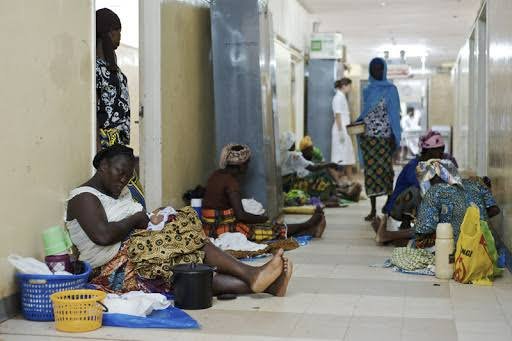
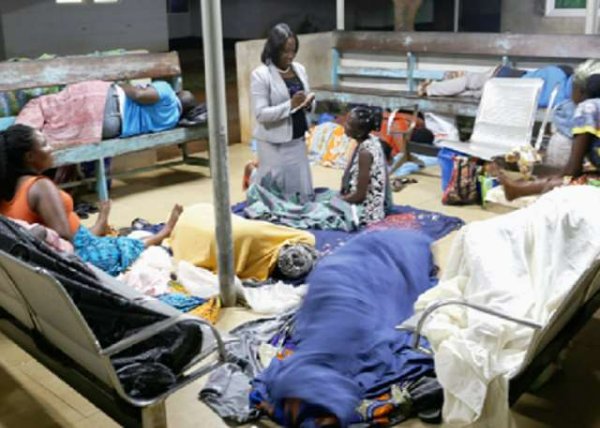
The “no-bed syndrome” has become one of the most visible manifestations of pressure within Ghana’s emergency healthcare system. Patients arrive at hospitals requiring urgent attention, only to encounter occupied beds, congested inpatient units or delays in identifying appropriate placement.
The problem, however, is larger than the physical number of beds. The literature has associated the syndrome with inadequate emergency healthcare access and weaknesses across the emergency care system, including insufficient infrastructure, human-resource constraints, referral-system weaknesses, inefficient patient flow and prolonged hospital stays.
The scale of the pressure is significant. In March 2026, the Ghana Registered Nurses and Midwives Association reportedly indicated that the country had approximately 0.7 hospital beds per 1,000 population, while some major hospitals were recording occupancy levels of between 120 and 150 per cent.
These figures underline the need for investment in infrastructure. But they should also force us to ask a difficult question: What if Ghana’s no-bed problem is not only a shortage-of-beds problem, but also a patient-flow problem?
From Bed Shortage to Flow Failure
A hospital can have a limited number of beds and still improve access to them if patients move efficiently through the system.
Conversely, a hospital can have beds and still experience “no-bed syndrome” when patients who could safely move from emergency care to wards, observation areas, outpatient services, referral facilities or home remain in the wrong location for too long.
This is where our understanding of triage must evolve.
Traditional triage essentially asks: How sick is this patient, and how urgently should the patient be seen?
Integrated hospital-wide triage asks a broader set of questions: Where should this patient be cared for? By whom? At what level of urgency? And how should the patient move safely through the hospital?
That distinction is fundamental. Triage should not end when a patient leaves the entrance of the Emergency Department. It should become part of a coordinated system that connects clinical need with hospital capacity.
Seeing the Hospital as One System
Integrated triage extends clinical prioritisation across the hospital. It connects emergency care, outpatient services, medical and surgical units, paediatrics, obstetrics and gynaecology, observation areas, admissions, discharges, internal transfers, referrals, bed management, escalation and patient-flow monitoring.
The objective is straightforward: the right patient, in the right place, at the right time, with the right team.
Consider a 66-bed hospital. If each unit manages its beds independently, the institution effectively operates as several disconnected bed pools. But if those 66 beds are treated as one hospital resource, a different set of questions becomes possible.
Where are the available beds? Which patients are ready for discharge? Who is waiting for admission? Are some patients occupying inappropriate locations? Which patients could safely receive care elsewhere? Which unit is approaching saturation? And where is the next bottleneck developing?
Most importantly, who is responsible for coordinating patient movement across the entire system?
This is where an Integrated Triage Officer could become strategically important.
Connecting Triage, Bed Management and Patient Flow
An Integrated Triage Officer could serve as the operational link between clinical triage, patient flow and bed management. Working with focal triage nurses across clinical units, the officer could help maintain a continuous picture of patient movement and available capacity.
Instead of treating triage, treatment, observation, admission, transfer, discharge and bed availability as separate processes, they would be viewed as parts of one patient journey.
The guiding principle should be simple: Every bed is a hospital resource before it is a ward resource.
This does not mean moving patients indiscriminately between departments. It means making available capacity visible, identifying clinically appropriate placement early and actively managing unnecessary delays.
Integrated Triage Does Not Mean Fewer Beds Are Needed
There is an important caveat.
Integrated triage cannot build a new ward. It cannot substitute for adequate infrastructure, staffing, equipment or sustained national investment in healthcare. Ghana still needs more capacity.
What integrated triage can do is help hospitals unlock capacity that already exists but is being poorly coordinated.
For instance, when a patient remains unnecessarily in an emergency area because an inpatient bed has not been identified, that emergency bed becomes unavailable to another patient. When discharge processes are delayed, inpatient beds remain occupied. When referrals are made without confirmation of receiving capacity, patients can simply move from one congested facility to another.
These are not necessarily problems that can be solved by constructing another ward. They are also problems of coordination, communication and patient flow.
From “No Bed” to “Know the Bed”
This is particularly important as Ghana advances the National Integrated Bed Management and Referral Coordination System, which seeks to provide real-time information on available beds and improve referral coordination.
But digital visibility alone will not solve the problem.
A computer system can tell us that a bed exists. Integrated clinical triage must help determine whether that bed is appropriate for the patient.
Technology can tell us where capacity is. Integrated triage helps determine who needs it, how urgently they need it and what should happen next.
The two systems therefore need to work together.
The Ghanaian Opportunity
Ghana does not necessarily have to wait until every hospital acquires hundreds of additional beds before improving patient flow. Hospitals can begin by examining how existing resources are organised and used.
That requires a shift from department-centred care to hospital-wide patient-flow management.
Clinical units cannot continue to function as isolated islands. They must operate as interconnected components of one health system, with shared responsibility for moving patients efficiently and safely through the continuum of care.
There is already evidence that patient flow is an important component of Ghana’s no-bed challenge. The source points to a Ghanaian emergency-care quality-improvement programme that introduced nurse-led triage, multidisciplinary triage decision-making, active bed-management functions and monitoring of occupancy and bed turnover to improve access and flow.
What an Integrated Model Could Look Like
A practical hospital-wide triage model could be built around seven interconnected functions: entry-point triage; departmental triage; nurse navigation; bed management; escalation; digital patient-flow monitoring; and governance and quality improvement.
Together, these functions would transform triage from a screening activity into a hospital-wide clinical governance and patient-flow function.
It would also create a clearer basis for measuring performance. Hospitals could examine how long patients remain at each stage of care, where delays occur, how quickly clinically ready patients move to the next appropriate level of care and where capacity constraints are emerging.
The Real Question Ghana Must Ask
The question facing Ghana should not simply be: How many more hospital beds do we need?
That question is important but incomplete.
We must also ask: How efficiently are we using the beds we already have? How long do patients remain in each stage of care? How quickly can a clinically ready patient move to the next appropriate level of care? How effectively do hospitals communicate their capacity? And who owns patient flow across the entire hospital?
Ultimately, we should ask whether triage can become the mechanism that connects clinical urgency with hospital capacity.
The Bed Is Only One Part of the Solution
Ghana’s no-bed syndrome will not be solved by building beds alone. Nor will it be solved by technology alone, ambulances alone, referral directives alone or isolated departmental interventions.
The country needs a whole-system response.
Integrated hospital-wide triage offers one practical operational mechanism for achieving that transformation because it connects the patient’s clinical needs with the hospital’s available capacity. It changes the question from simply “Who should be seen first?” to “Who needs what, where, when and by whom, and how do we move that patient safely through the system?”
Ghana certainly needs more hospital beds. But it also needs to ensure that every available bed, every clinical team and every patient pathway is used intelligently, safely and efficiently.
The challenge is therefore not only to build more capacity, but to manage existing capacity better.
The future should be from no bed to smart bed management; from fragmented triage to integrated triage; from hospital congestion to patient flow; and, ultimately, from “no bed” to “know the bed.”
Perhaps the most important principle is this:
A hospital does not only need more beds. It needs a system that knows how to move patients through the beds it already has.
By Sarah Danquah
Senior Nursing Officer/Integrated Triage Officer
Weija Gbawe Municipal Hospital












Comments (0)
No comments yet. Be the first to comment!