 Breaking News

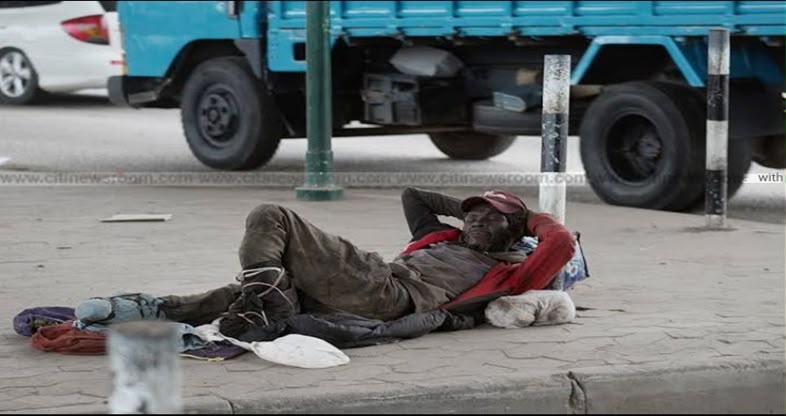
For many young people in Ghana, the street is no longer simply a place to pass through. For some, it has become a place to sleep, work and survive.
Across the country, young people facing unemployment, unstable accommodation and substance-use problems are increasingly vulnerable to life on the streets.
The situation raises concerns about Ghana’s ability to provide young people with the opportunities and support they need to build secure futures.
Recent figures from the Ghana Statistical Service show the scale of the employment challenge. Youth unemployment among people aged 15 to 35 averaged 21.9 percent during the first three quarters of 2025. About two million young people were also classified as not being in employment, education or training.
For young people without family support or stable accommodation, unemployment can quickly become a housing problem.
Without a regular income, paying rent, buying food and meeting transport costs becomes difficult. Some young people may then depend on friends, relatives or temporary spaces before eventually finding themselves on the streets.
The accommodation crisis is particularly acute in urban areas, where the cost of living continues to put pressure on low-income households.
Drug use and vulnerability
Substance use can also deepen the challenges faced by young people already living in difficult circumstances.
Social workers and child-protection agencies have identified poverty, family difficulties and substance-abuse problems among the factors that can expose young people to neglect, risky behaviour and social exclusion.
For a young person already struggling with unemployment or family instability, substance use can make it harder to remain in school, maintain relationships or secure stable employment.
The problem should therefore not be viewed only as a matter of individual responsibility. It also requires attention to family support, rehabilitation, education and employment opportunities.
Unemployment and lost opportunities
The lack of decent employment remains one of the strongest pressures facing Ghanaian youth.
These figures represent more than statistics.
Behind them are young people who have completed school but cannot find work, young adults struggling to support themselves and others who lack the skills or opportunities required by the labour market.
The paucity of quality jobs can therefore contribute to the vulnerability of young people and increase their risk of homelessness.
The human cost
Life on the street exposes young people to several forms of vulnerability.
They may struggle to access regular meals, healthcare, education and safe accommodation. They may also face exploitation, violence and social isolation.
The consequences can extend beyond the individual.
When young people remain excluded from education, employment and stable housing, Ghana loses valuable human potential that could contribute to national development.
A national responsibility
Addressing youth homelessness requires more than removing young people from the streets.
Government agencies, local authorities, families, civil society organisations and private-sector employers must work together to tackle the root causes.
More affordable accommodation, practical skills training, decent employment opportunities and stronger social-support systems could help prevent vulnerable young people from falling into street life.
Young people struggling with substance use also need access to appropriate professional support and rehabilitation rather than being treated only as a social nuisance.
Ghana’s youth population presents a major opportunity for national development.
The challenge, therefore, is not simply to keep young people off the streets.
It is to create a Ghana where young people can find decent work, afford safe accommodation and receive support when circumstances push them into vulnerable situations.
Until that happens, the streets will continue to tell a troubling story about young lives struggling to find a place to call home.









Comments (0)
No comments yet. Be the first to comment!