 Breaking News

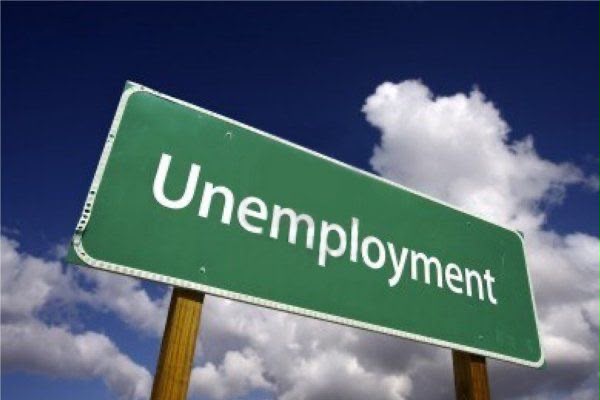
For years the message to young Ghanaians has been simple: go to school, obtain a degree and build a better future.
For many families, a university education represents one of the biggest investments they can make in their children. Parents sacrifice to pay fees, provide accommodation and cover other expenses, believing that graduation will eventually lead to stable employment.
But for a growing number of young people, the journey does not end with graduation. Instead, it begins with job applications, unanswered emails, interviews, internships and the frustrating search for an opportunity to gain the experience employers demand.
The phrase “degree, no job” has therefore become more than a casual expression. For many young Ghanaians, it reflects a difficult transition from education into the world of work.
The numbers behind the frustration
Ghana’s labour market data illustrate why the transition from school to work remains a major concern.
According to the Ghana Statistical Service’s Quarterly Labour Force Survey for the first three quarters of 2025, Ghana’s unemployment rate reached 13.0% in the third quarter of 2025, up from 12.6% in the second quarter.
The situation is considerably more difficult for younger people. For those aged 15 to 24, unemployment stood at 32.4% in Q3 2025, more than twice the national unemployment rate.
The same report found that approximately 21.5% of people in this age group were not in employment, education or training (NEET). (Ghana Statistical Service)
These figures reveal an important reality: while Ghana is creating jobs, the pace and nature of job creation are not sufficient to absorb all new entrants into the labour market.
The Ghana Statistical Service reported that employment increased by more than 330,000 people between the first and third quarters of 2025. Yet unemployment did not fall consistently because new people continued to enter the labour market. (Ghana Statistical Service)
This is where the experience of many graduates becomes part of a much larger economic problem.
When education meets a difficult labour market
A university degree is valuable, but a degree alone does not guarantee employment. The modern labour market increasingly demands a combination of academic knowledge, practical experience, technical ability and soft skills. This creates a difficult situation for newly graduated students.
Many employers want applicants who can immediately contribute to an organisation. As a result, job advertisements frequently include requirements such as previous work experience, computer skills, communication skills, problem-solving ability and industry-specific knowledge.
For a graduate who has spent several years primarily in the classroom, this can create a frustrating question:
Where does the experience come from if every employer requires experience?
Internships and national service can provide some practical exposure, but competition for opportunities remains high.
The problem is therefore not simply that young people lack degrees. It is also about whether education, skills development and the demand for labour are sufficiently connected.
The International Labour Organization has identified the mismatch between education and labour-market requirements as one of the challenges affecting youth employment in Ghana.
More recently, the ILO has worked with Ghanaian institutions to strengthen labour-market intelligence so that skills development can better respond to industry needs. (ILO Web Apps)
The changing meaning of a university degree
For previous generations, completing university could be seen as a relatively direct route into formal employment. Today, that relationship is less certain.
The expansion of tertiary education means more young people are acquiring academic qualifications and entering a labour market where formal employment opportunities remain limited.
This does not mean that university education has lost its value. Rather, the meaning of a degree is changing.
A degree can provide knowledge, critical thinking and professional foundations, but graduates increasingly need to combine those qualifications with practical and digital skills. For a journalism student, for example, understanding journalism theory may not be enough.
Employers may also expect knowledge of video production, social media, digital storytelling, photography, data journalism or content management.
The same principle applies across many professions.
The graduate who learns how to apply classroom knowledge to real-world problems may have an advantage over someone who relies solely on a certificate.
When graduates create their own opportunities
Faced with limited formal employment opportunities, some young Ghanaians are creating alternative sources of income.
The rise of the digital economy has opened opportunities in areas such as graphic design, video editing, photography, social media management, digital marketing, online retail, content creation and freelancing. Others turn to small businesses, agriculture, transportation services, food production and other forms of self-employment.
This shift has helped challenge the traditional idea that success must always mean sitting behind a desk from 8 a.m. to 5 p.m. But the alternative economy also has limitations.
Self-employment does not automatically mean financial security.
Freelancers may experience irregular income. Small businesses can struggle with access to capital. Digital workers depend on internet connectivity, equipment and access to clients.
The latest Ghana Statistical Service labour data highlights this broader issue. More than two-thirds of employed people were classified as being in vulnerable employment in Q3 2025, while own-account work continued to dominate employment.
This suggests that having a job and having secure, decent work are not necessarily the same thing. (Ghana Statistical Service)
The pressure beyond the payslip
Graduate unemployment is also a social issue. For a young person who has spent years in school, remaining unemployed after graduation can be emotionally and socially difficult. There is pressure to become financially independent.
There is pressure from parents who have invested in education. There is pressure from friends who appear to be progressing. And there is the personal pressure of wondering whether the years spent studying will eventually translate into the life that was imagined.
The situation can be especially difficult when graduates are forced to accept jobs that have little connection to their education simply because they need an income.
There is nothing wrong with taking alternative work. In fact, many young people demonstrate remarkable resilience by finding ways to survive and support themselves.
But survival should not become the only measure of economic success. A country also needs to create pathways through which educated young people can use their knowledge productively.
Is the problem the graduates or the system?
It is tempting to tell unemployed graduates to simply acquire more skills, become entrepreneurs or “think outside the box.”
Those suggestions have value, but they do not tell the whole story. Employment is a two-sided equation. Young people need relevant skills, but businesses also need to grow enough to create positions for those skills.
The World Bank’s 2025 Economic Update on Ghana noted that the country’s expanding working-age population represents a major opportunity for economic growth, but only if the growing labour force can be absorbed into productive employment.
It emphasised the need for job creation, structural transformation and skills development, particularly to improve young people’s transition from school to work. (World Bank)
This means graduate unemployment cannot be solved by graduates alone.
Government policies, private-sector investment, education, entrepreneurship support and skills development all have roles to play.
What universities can do differently
Universities also have an important role in preparing students for the realities of employment. Academic knowledge remains essential, but students need opportunities to apply that knowledge before graduation.
More practical projects, stronger industry partnerships, internships, mentorship programmes and career-development support could help students understand what employers expect before they enter the labour market.
The relationship between universities and industry should therefore go beyond occasional seminars. Students should have opportunities to work on real projects, interact with professionals and develop portfolios that demonstrate what they can actually do.
For students entering creative and digital industries, this is particularly important.
A portfolio of well-produced videos, articles, designs or campaigns may sometimes communicate a graduate’s abilities more effectively than a certificate alone.
Government’s role in creating decent work
Government intervention is equally important. Ghana’s labour-market challenge is not simply about creating any form of work.
The quality, stability and productivity of that work matter. In April 2026, Ghana and the International Labour Organization launched the Decent Work Country Programme III for 2026–2030, which identifies youth unemployment, informality, inequality and social protection gaps among the country’s labour-market challenges.
The programme places emphasis on job creation, skills alignment, entrepreneurship and preparing workers for changes such as digital transformation. (International Labour Organization)
The government also needs to ensure that policies designed to support young people translate into opportunities that are accessible, sustainable and measurable.
Training young people without creating pathways to use those skills will not solve the problem. Similarly, encouraging entrepreneurship without addressing access to finance, markets and business support can leave young people with certificates and business ideas but limited capacity to turn them into sustainable enterprises.
A generation learning to adapt
Despite the challenges, Ghana’s young people are not simply waiting for jobs. Across the country, young people are learning new skills, building businesses, creating content, freelancing and experimenting with different ways of earning an income.
The growth of digital work has particularly demonstrated that employment no longer has to fit into one traditional model. A young graduate can work for a company, freelance for international clients, operate a small business and create digital content at the same time.
That flexibility can be an advantage. But it should not become an excuse to ignore the need for decent formal employment and stronger economic opportunities. Young people should have the freedom to choose entrepreneurship and freelance work because they want to, not because they have no other option.
Beyond the certificate
The debate about graduate unemployment should therefore move beyond the question of whether young people have enough qualifications. The more important question is whether Ghana’s economy is creating enough productive opportunities for the people being educated.
The latest labour statistics show that Ghana is creating employment, but they also show that unemployment remains particularly high among young people and that a large share of employment is vulnerable.
(Ghana Statistical Service) That is the contradiction at the heart of Ghana’s employment challenge. The country is educating more young people while many still struggle to make a successful transition into decent work.
A university degree should not be treated as a guaranteed job ticket. But neither should unemployment after graduation be treated as an inevitable consequence of being young.
The responsibility is shared. Universities must prepare students for a changing labour market. Young people must continue developing relevant skills. Businesses must create opportunities for talent to enter and grow. And policymakers must build an economy capable of generating productive and decent jobs at the scale required.
For Ghana’s young graduates, the dream is often not complicated. They want an opportunity to use what they have learned, earn a decent income and build a future they can call their own.
The certificate may open the door to that future. But unless there are enough doors to open, a generation of educated young people will continue to ask the same question: After all these years of education, where is the work?









Comments (0)
No comments yet. Be the first to comment!