 Breaking News

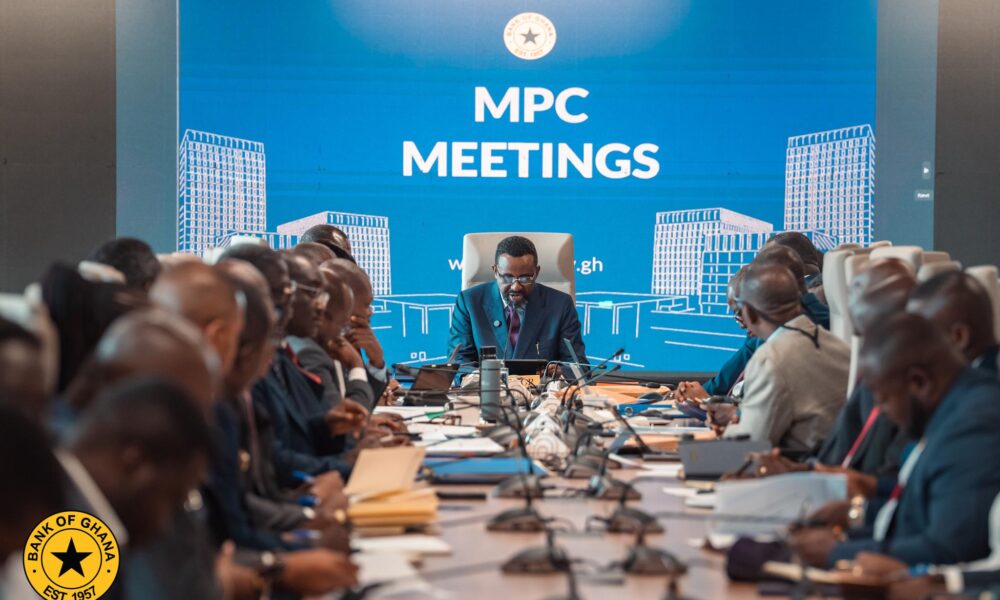
The Governor of the Bank of Ghana (BoG), Dr Johnson Asiama, has signalled that realigning the entire interest-rate structure in the economy is among the most pressing issues on the agenda at the 130th Monetary Policy Committee (MPC) meeting.
This comes as the committee weighs how to consolidate recent gains in low inflation while ensuring the banking sector delivers the credit expansion needed to sustain economic growth.
Opening the three-day meeting at Bank Square in Accra on Monday, May 18, the Governor stressed that the committee faces a complex set of competing priorities, protecting hard-won macroeconomic stability, responding to new external shocks from the Middle East conflict, and building a banking sector strong enough to support Ghana’s next phase of economic transformation.
“Realigning the entire interest rate structure in the economy as inflation remains low, while addressing policies to ensure inflation expectations do not become dislodged, are among the substantive issues the committee must address at this meeting,” he highlighted.
The Governor underscored that a strong banking sector is indispensable to Ghana’s economic future, pointing out that steps are needed to ensure financial stability concerns are addressed and that the banking system is positioned to deliver on credit expansion as the economy moves from stabilisation into growth.
He noted that the 36‑month Policy Coordination Instrument agreed with the IMF would also focus on strengthening the Bank of Ghana’s balance sheet over the medium term by limiting quasi‑fiscal activities, improving transparency and oversight of the Domestic Gold Purchase Programme, and addressing operational constraints related to the foreign‑exchange intermediation architecture.
The Governor warned that fiscal risks, from external revenue compression, current-account and reserve vulnerabilities, and the domestic power crisis, which, though showing signs of abatement, have elevated business costs, and consumer inflation expectations remain contingent risks that the committee will need to weigh carefully in its deliberations.
He said the committee’s decisions over the three‑day meeting will need to strike a careful balance between consolidating the gains of recent years and responding with sufficient agility to an external environment that has become measurably more difficult since the last MPC meeting in March.
“The economy will need a strong banking sector, and steps will be needed to ensure that the financial stability concerns are protected and the banking system is made to deliver on credit expansion,” he urged.












Comments (0)
No comments yet. Be the first to comment!