 Breaking News

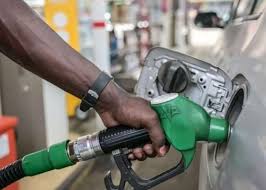
The Institute for Energy Security has thrown its weight behind the National Petroleum Authority price floor policy, describing it as a critical shield for fair competition and the long term stability of Ghana’s deregulated petroleum market.
In a statement dated January 19, the Institute responded to recent public comments by the Chief Executive Officer of StarOil Ghana, who argued that the price floor prevents the company from selling fuel at significantly lower prices.
According to the IES, StarOil claimed it could sell petrol at GH₵9.50 per litre during off peak night hours if the price floor regime were scrapped.
The remarks sparked heated public debate, particularly on social media. However, the Institute cautioned against reducing a complex regulatory policy to headline friendly soundbites.
“While public engagement on energy pricing is healthy, discussions must be grounded in sound market principles, regulatory context, and the long term interests of Ghana’s petroleum sector,” the statement said.
The IES explained that Ghana’s downstream petroleum market is highly exposed to global oil price movements and exchange rate volatility, making it capital intensive and inherently risky. It stressed that the NPA price floor was introduced to stabilise competition rather than to fix prices.
“The price floor is a competition stabilising mechanism, not a price fixing tool,” the Institute stated.
According to the IES, the policy plays a vital role in preventing predatory pricing by dominant players, protecting smaller and emerging oil marketing companies, and preserving a healthy competitive environment.
The Institute noted that the price floor helps guarantee supply continuity during periods of tight margins or market stress, while promoting long term consumer welfare instead of short term price cuts that could lead to market concentration and higher prices later.
Citing international experiences, the IES warned that unregulated fuel price wars often end in monopolisation, supply disruptions, and ultimately higher prices for consumers.
The Institute also raised red flags over the suggestion that fuel could be sold at cheaper prices during specific hours, such as overnight.
It explained that the cost of fuel retailing does not fall at night, as storage, financing, distribution, and inventory risks remain unchanged.
The IES said claims of sustainably selling fuel below the approved floor raise serious questions, including whether prices are below economic cost, whether losses are being used to drive competitors out, and what happens to prices if smaller oil marketing companies collapse.
“These are exactly the market failures the price floor is designed to prevent,” the statement said.
The Institute also referenced reactions from other industry players, including GOIL Ghana, whose Group Chief Executive Officer challenged StarOil’s claims, arguing that some firms calling for lower prices are unable to compete even at the approved floor of GH₵9.80 per litre in the current pricing window.
According to the IES, this disconnect between industry realities and public messaging highlights the danger of oversimplifying fuel pricing debates for social media attention. The Institute further questioned the timing and motivation behind calls to abolish the price floor.
“A critical question must be asked. Would the call to remove the price floor have arisen if StarOil were not a market leader today?” it queried.
The IES warned that regulatory safeguards such as the price floor have historically enabled many oil marketing companies to survive, expand, and invest in infrastructure, and should not be dismantled after market dominance has been achieved.
In response to the claims, the Institute formally called on the NPA to probe StarOil’s pricing assertions and cost structures.
It urged the regulator to investigate any potential attempt at predatory pricing or market distortion, assess compliance with pricing regulations, and reaffirm the principles underpinning the price floor policy.
“Regulation must be evidence based, transparent, and uniformly enforced, especially in markets that directly affect national economic stability and household welfare,” the statement said.
The IES concluded by calling for a more informed and responsible national conversation on fuel pricing.
“The debate on fuel pricing must move beyond headline grabbing claims to serious engagement with market economics, competition policy, and long term consumer protection. Short term price cuts that weaken market structure are not pro consumer in the long run,” the Institute stated.











Comments (0)
No comments yet. Be the first to comment!