 Breaking News

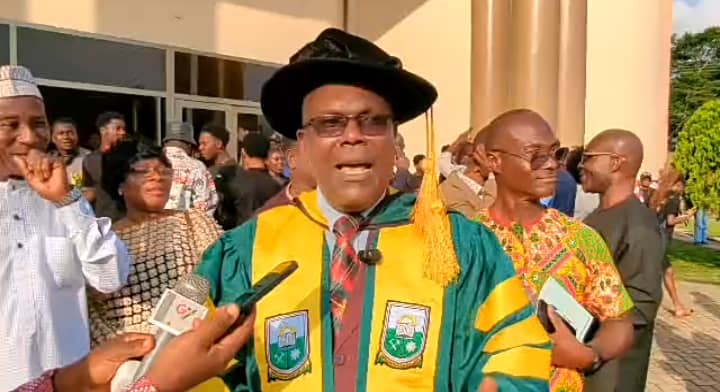
Professor of Electromechanical Engineering at the University of Mines and Technology (UMaT), Christian Kwaku Amuzuvi, has called on the government to remove the 20 percent tax imposed on imported solar equipment to encourage widespread adoption of residential solar systems in Ghana.
Prof. Amuzuvi argued that the tax on solar products is making the technology less attractive and is slowing the country's transition to clean and renewable energy sources.
According to him, although the global cost of solar technology has fallen significantly, many Ghanaians remain unable to adopt the technology because of high upfront installation costs and limited financing options.
Speaking during UMaT's 13th Professorial Inaugural Lecture on the theme, "Driving the Green Energy Transition: Translating Ghana's LPG Adoption Model to Residential Rooftop Solar PV Systems," he noted that solar energy remains a viable alternative to Ghana's electricity supply challenges and urged stakeholders to intensify public education on the benefits of rooftop solar photovoltaic (PV) systems.
Prof. Amuzuvi said that in countries where solar adoption has been successful, companies actively engage households, educate them on the benefits of solar energy and provide flexible payment arrangements to make the technology more accessible.
"I said we should use the solar energy because is something that God has given us, just see as I'm sweating as I'm talking, meanwhile God has given us the solar to use and we don't use it.
"And the government too is not doing anything about it meanwhile you're also taking tax, you've putting tax on the panels which has made it cost a lot and people cannot buy it.
"So anytime you asked people to moved to solar they'll be like the solar is very expensive but is not like that, the price has become competitive, is not all that expensive. In my lecture I showed that is not expensive.
"So when the government take off the taxes today, you'll see what will happen tomorrow especially those in the gas sector, those who invest in solar, they'll be happy and they'll give dues to people, they'll go home to home telling people this is the benefit," he explained.
He further urged financial institutions to develop affordable financing packages and loan schemes to enable households and businesses to invest in solar systems.
Professor Amuzuvi suggested that consumers should be allowed to spread payments over five to seven years, after which they would enjoy reliable and affordable electricity.












Comments (0)
No comments yet. Be the first to comment!