 Breaking News

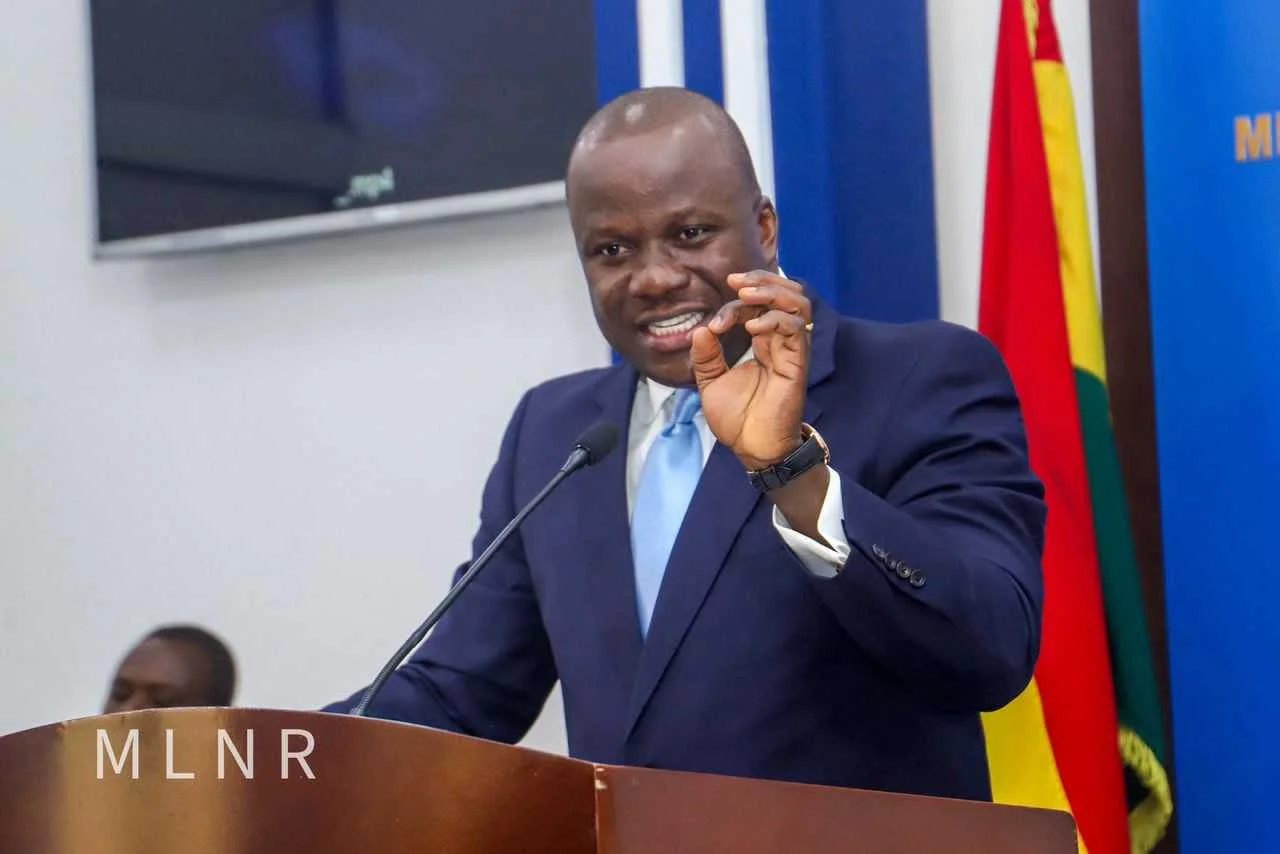
Member of Parliament for Damongo, Samuel Abu Jinapor, has raised concerns over what he describes as a growing erosion of investor confidence in Ghana’s mining sector following the country’s drop in the latest global investment rankings.
In an opinion commentary, the former Lands and Natural Resources Minister pointed to Ghana’s fall from 46th position in 2024 to 53rd in 2025 in the Global Mining Investment Attractiveness Index compiled by the Fraser Institute.
The report, which assessed 68 countries this year, evaluates mining jurisdictions based on how public policies either attract or discourage investment. Ghana also recorded a decline in the Policy Perception Index, ranking 50th out of 68 countries in 2025.
Mr. Jinapor noted that Ghana now trails several African peers, including Côte d’Ivoire, the Democratic Republic of Congo, Namibia, Zambia, Tanzania, Morocco, and Botswana, raising concerns about the country’s competitive edge in attracting capital.
He attributed the drop to investor concerns over regulatory uncertainty, fiscal policy shifts, and inconsistency in policy direction, warning that these signals could deter long-term investment.
The Damongo MP stressed that the decline is particularly troubling given the mining sector’s historic contribution to Ghana’s economy through export earnings, employment, and foreign exchange inflows.
He highlighted gains made under the administration of former President Nana Addo Dankwa Akufo-Addo, including Ghana’s rise to become Africa’s leading gold producer, with output hitting 4.9 million ounces in 2024 and generating over $10 billion in export revenue.
Key initiatives during that period included the Domestic Gold Purchase Programme and major projects such as the Cardinal Namdini mine, which began production in October 2024.
Ghana’s improved performance was reflected in its investment attractiveness score, which rose significantly between 2023 and 2024 before the recent decline.
Despite these gains, Mr. Jinapor said the latest report signals a shift in investor sentiment, citing concerns such as regulatory duplication, taxation pressures, trade barriers, and weaknesses in the legal framework.
He also pointed to recent fiscal measures, including the introduction of a sliding royalty regime, as well as debates around increased state participation in mining, which he said may be fuelling uncertainty.
Earlier warnings by the Ghana Chamber of Mines, he noted, suggest that some policies could constrain investment growth and undermine long-term revenue sustainability.
The MP further identified illegal mining activities and limited geological exploration as key structural challenges affecting investor confidence.
He stressed that illegal mining continues to disrupt licensed concessions and increase operational risks, while inadequate geological data weakens Ghana’s attractiveness to investors.
To reverse the trend, Mr. Jinapor called for a comprehensive review of mining policies, including simplifying the fiscal regime, strengthening regulatory clarity, and boosting investment in exploration.
He also urged government to enhance the capacity of the Ghana Geological Survey Authority and deepen partnerships to unlock the country’s mineral potential.
Additionally, he advocated for a long-term strategy to link mining to downstream value addition, including refining and processing, to maximise economic benefits.
Mr. Jinapor warned that failure to address these concerns could undermine key national initiatives, including efforts to build gold reserves, and weaken Ghana’s position as a leading mining destination in Africa.
He emphasised that restoring investor confidence will depend on consistent, transparent, and investor-friendly policies that reassure both local and international stakeholders.








Comments (0)
No comments yet. Be the first to comment!