 Breaking News

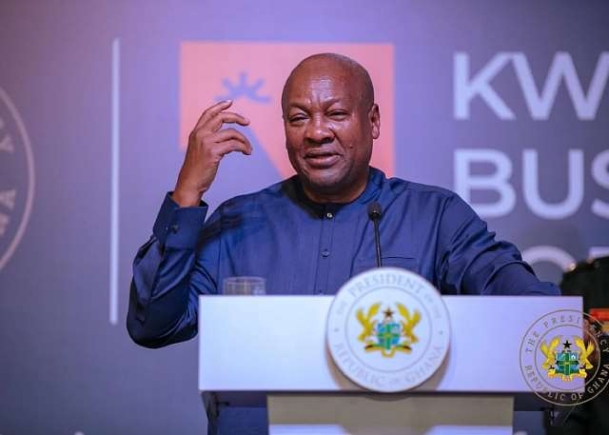
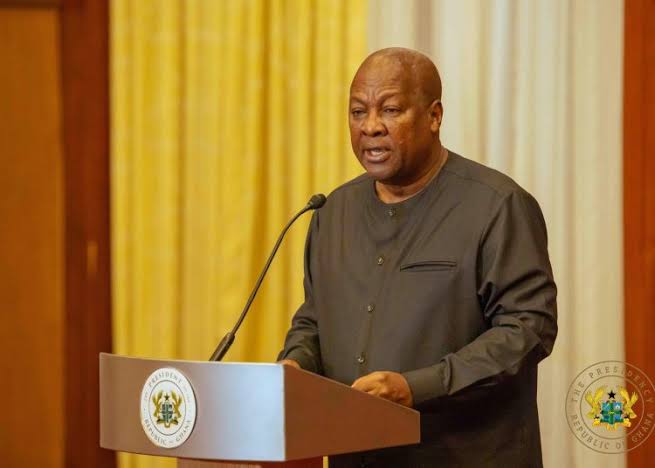
The Centre for Democratic Development (CDD-Ghana) has released a one-year assessment of President John Dramani Mahama’s second term, describing the first year as “a story of promising signals constrained by structural realities.”
While the report applauds the administration’s efforts in macroeconomic stabilisation, it identifies significant gaps in governance, anti-corruption initiatives, and environmental management.
CDD-Ghana noted that the Mahama II administration inherited a climate of deep public distrust, with only 28% of citizens expressing confidence in the presidency at the start of 2025. Positive steps highlighted include the launch of a Code of Conduct for appointees and the establishment of a new Constitution Review Committee (CRC II).
However, the transition was not without turbulence. The report cited instances of “vigilante violence” as NDC-affiliated groups illegally stormed public facilities like Ghana Gas. It also pointed to a “transparency deficit” in the removal of former Chief Justice Gertrude Torkonoo, as the committee report was never made public.
In Parliament, the NDC’s two-thirds majority led to the frequent use of “certificates of urgency” to fast-track bills, such as the Energy Sector Levy Bill, limiting meaningful debate.
Economic Performance
The report gave the administration high marks for stabilising the economy. Local governments received 80% of the District Assemblies Common Fund (DACF), a notable improvement from the 40–50% average under the previous government. Efforts to tackle high inflation and debt distress were central to the Reset Agenda, though CDD-Ghana warned that sustaining progress through the 2027 debt repayment cycle remains a challenge.
Anti-Corruption Challenges
While the President limited ministerial appointments to 60, the anti-corruption agenda faced credibility issues. Initiatives like “Operation Recover All Loots” (ORAL) and the 2025 Code of Conduct were positive steps, but loopholes—such as the GH₵20,000 gift threshold—were criticised. Selective enforcement also raised concerns, with the Attorney General appearing tougher on opposition figures than government-aligned individuals.
Environmental Concerns
The report paints a grim picture of Ghana’s forests and waterways. Of 288 forest reserves, 50 are under threat from illegal mining (galamsey). Mercury levels in mining communities, like Konongo Zongo, exceed safety limits by 560%. Cleaning just three river basins is projected to cost GH¢105.4 billion.
Social Development
The administration’s social policies were seen as restorative rather than transformative. Key achievements include:
- Education: GH¢9.1bn allocated to basic education; the “No Academic Fee Policy” benefitted over 120,000 first-year tertiary students.
- Health: Uncapped National Health Insurance Levy improved liquidity and reduced arrears.
- Social Protection: LEAP coverage expanded to 400,000 households, with transfers now indexed to inflation.
Foreign Affairs and Security
Ghana reasserted its continental influence, appointing a Special Envoy to the Sahel and acting as an AU Champion on Reparatory Justice. However, CDD-Ghana noted coordination issues with ECOWAS and opaque migration partnerships. In security, the transfer of the National Security budget to the Ministry of Interior was praised, but the GH¢6m monthly cost of the Bawku Security Task Force and outdated equipment—highlighted by a 2025 helicopter crash—remain concerns.
Overall Assessment
CDD-Ghana concludes that President Mahama’s Reset Agenda is credible in its intent but uneven in implementation, with notable achievements overshadowed by gaps in governance, transparency, and environmental management.








Comments (0)
No comments yet. Be the first to comment!