 Breaking News

The government has announced a new producer price for cocoa while rolling out far-reaching financial and accountability reforms aimed at stabilising the cocoa sector and restoring confidence in the Ghana Cocoa Board (COCOBOD).
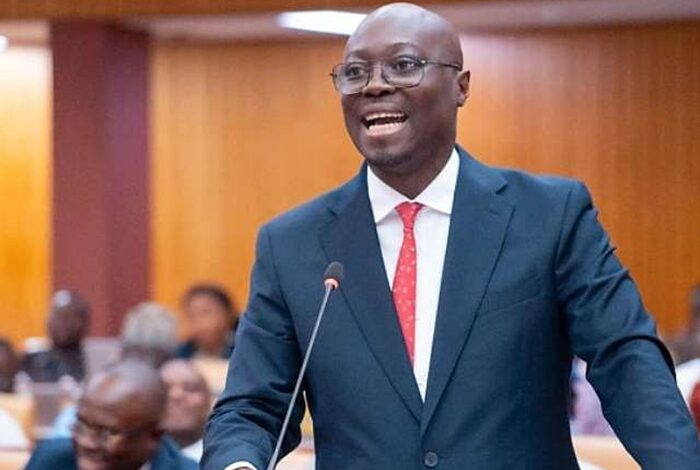
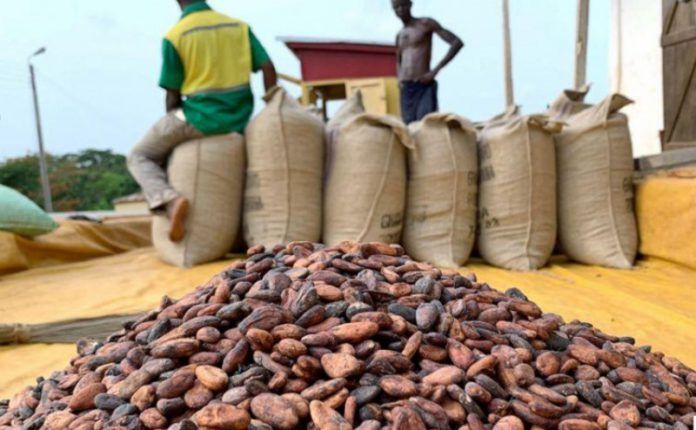
At a press briefing on Thursday, February 12, Finance Minister Dr Cassiel Ato Forson disclosed that the Producer Price Review Committee (PPRC), under his chairmanship, had approved a revised farmgate price of GH₵41,392 per tonne, equivalent to GH₵2,587 per bag, for the remainder of the 2025–2026 crop season, with immediate effect.
Dr Forson explained that the decision was taken against the backdrop of falling global cocoa prices, which have declined sharply from an average of US$7,200 per tonne to about US$4,100, creating liquidity pressures across the sector.
“To cushion the farmer, the PPRC has recommended that the farmer be paid 90 per cent of the achieved gross Free on Board (FOB) price of US$4,200 per tonne,” he said.
According to the Finance Minister, the revised price is intended to reflect current market realities while ensuring the expedited payment of farmers and safeguarding the long-term sustainability of Ghana’s cocoa industry.
COCOBOD’s GH₵5.8bn Legacy Debt to Be Restructured
Beyond the price adjustment, Dr Forson announced that Cabinet has directed the Ministry of Finance to seek urgent parliamentary approval to restructure GH₵5.8 billion in legacy debts inherited by the current management of COCOBOD.
He disclosed that the Board owes GH₵3.7 billion to the Ministry of Finance, arising from the conversion of non-marketable cocoa bills into a loan, and GH₵1.38 billion to the Bank of Ghana under a 10-year facility.
“The debt conversion will restore positive equity and boost confidence in both international and domestic markets to support the operations of COCOBOD,” Dr Forson stated.
As part of the financial clean-up, Cabinet has also approved the transfer of GH₵4.35 billion in cocoa road liabilities from COCOBOD to the Ministry of Roads and Highways and the Ministry of Finance.
The Finance Minister revealed that between 2014 and 2024, cocoa road contracts valued at GH₵26.5 billion were awarded, with GH₵21.5 billion of those contracts issued between 2018 and 2021. Although a 2023 agreement under the IMF programme sought to rationalise these liabilities to GH₵6.9 billion, the exercise was not completed.
He said the rationalisation has now been concluded under the supervision of the Ministries of Finance and Roads, reducing COCOBOD’s total exposure to GH₵4.35 billion, which will now be absorbed by government.
Forensic and Criminal Investigations Ordered Into COCOBOD
To strengthen transparency and accountability, Dr Forson announced that Cabinet has directed the Attorney-General and Minister for Justice, Dr Dominic Ayine, to initiate concurrent forensic and criminal investigations into COCOBOD’s activities over the past eight years.
According to the Finance Minister, the investigations will run alongside ongoing structural and financial reforms and are intended to restore public confidence in the management of the cocoa sector.
He added that a new COCOBOD Bill to be laid before Parliament will prohibit quasi-fiscal and non-core expenditures, with sanctions for breaches. In line with this policy shift, the 2026 Budget has already made provision for a US$500 million World Bank facility to finance agricultural roads, including cocoa roads, effectively removing that responsibility from COCOBOD.
The government’s intervention comes at a time of heightened stress in Ghana’s cocoa sector, driven by a combination of falling global prices, mounting debt, governance concerns and persistent delays in payments to cocoa farmers.
Over the past year, international cocoa prices have dropped sharply, squeezing COCOBOD’s revenues and weakening its ability to meet financial obligations. At the same time, legacy debts and heavy exposure to cocoa road financing have eroded the Board’s balance sheet, prompting concerns among farmers, lenders and development partners.
The situation has led to growing unrest in cocoa-growing communities, with farmers across several regions raising alarms over unpaid proceeds for beans supplied since late 2025, threatening livelihoods and Ghana’s position as the world’s second-largest cocoa producer.
Against this backdrop, the government says the combination of a revised producer price, debt restructuring and forensic investigations marks the beginning of a comprehensive reset aimed at restoring stability, accountability and sustainability to the cocoa sector.










Comments (0)
No comments yet. Be the first to comment!