 Breaking News

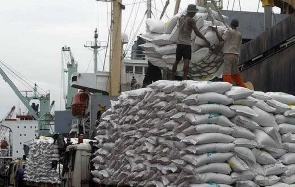
The Peasant Farmers Association of Ghana (PFAG) is calling on government to impose an immediate six-month ban on rice imports, arguing that the move is necessary to clear existing local stocks and stabilise Ghana’s domestic rice market.
The Association says the suspension would help improve farm-gate prices, reduce post-harvest losses, and restore confidence among local rice producers who are struggling to sell their output.
PFAG, in a statement issued on Thursday, June 4, 2026, said about 90% of locally produced rice currently remains unsold, blaming the situation on the National Food Buffer Stock Company (NAFCO) for failing to purchase surplus rice as previously directed.
According to the group, the development has placed significant financial strain on farmers and threatens the sustainability of Ghana’s rice production sector.
“PFAG calls on the government to immediately order a moratorium on rice imports for a minimum of six (6) months to allow for the clearance of existing Ghanaian-produced rice stocks,” the statement said.
The Association further urged government to conduct an urgent review of NAFCO’s mandate, procurement systems, financing structures, and institutional capacity to improve its effectiveness in supporting local agriculture.
It also proposed a legal framework that would require all public institutions—including ministries, departments and agencies, schools, hospitals, prisons, and the military—to prioritise the procurement of locally produced rice and other staple foods.
“Enact a legal and regulatory framework that mandates all government ministries, departments, agencies (MDAs), state-owned enterprises, public hospitals, schools, prisons, the military, and other public institutions to procure only locally produced rice and other staples,” PFAG stated.
The group also called for full implementation of the rice import quota policy, describing it as critical to strengthening Ghana’s local rice industry and reducing reliance on imports.
Additionally, PFAG urged government to invest in post-harvest infrastructure, including storage facilities, milling capacity, and market access systems, to reduce losses and improve competitiveness.
Without urgent intervention, the Association warned that many farmers risk severe financial hardship, a situation it says could undermine national food security efforts and long-term agricultural sustainability.










Comments (0)
No comments yet. Be the first to comment!